What you get on the stand
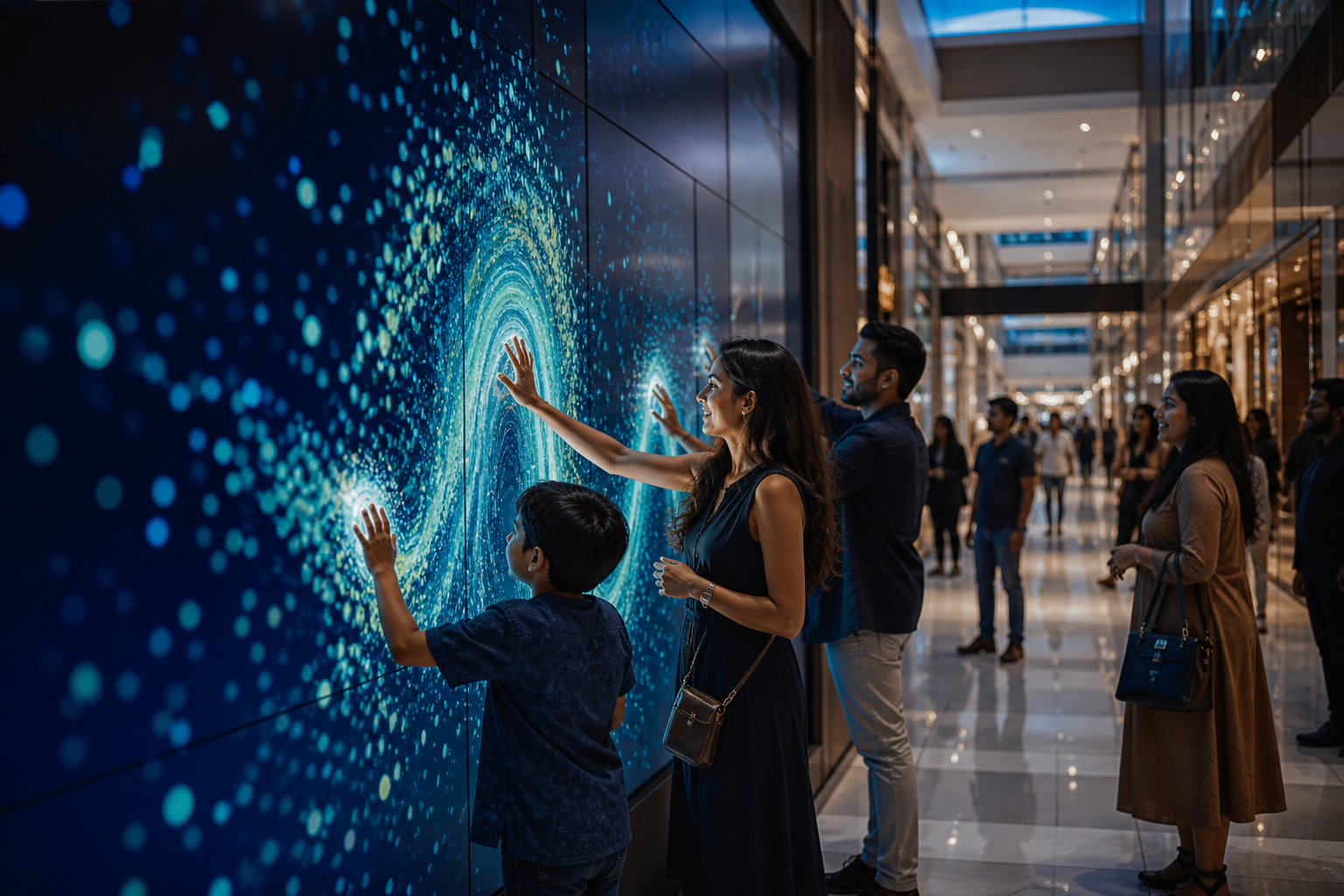
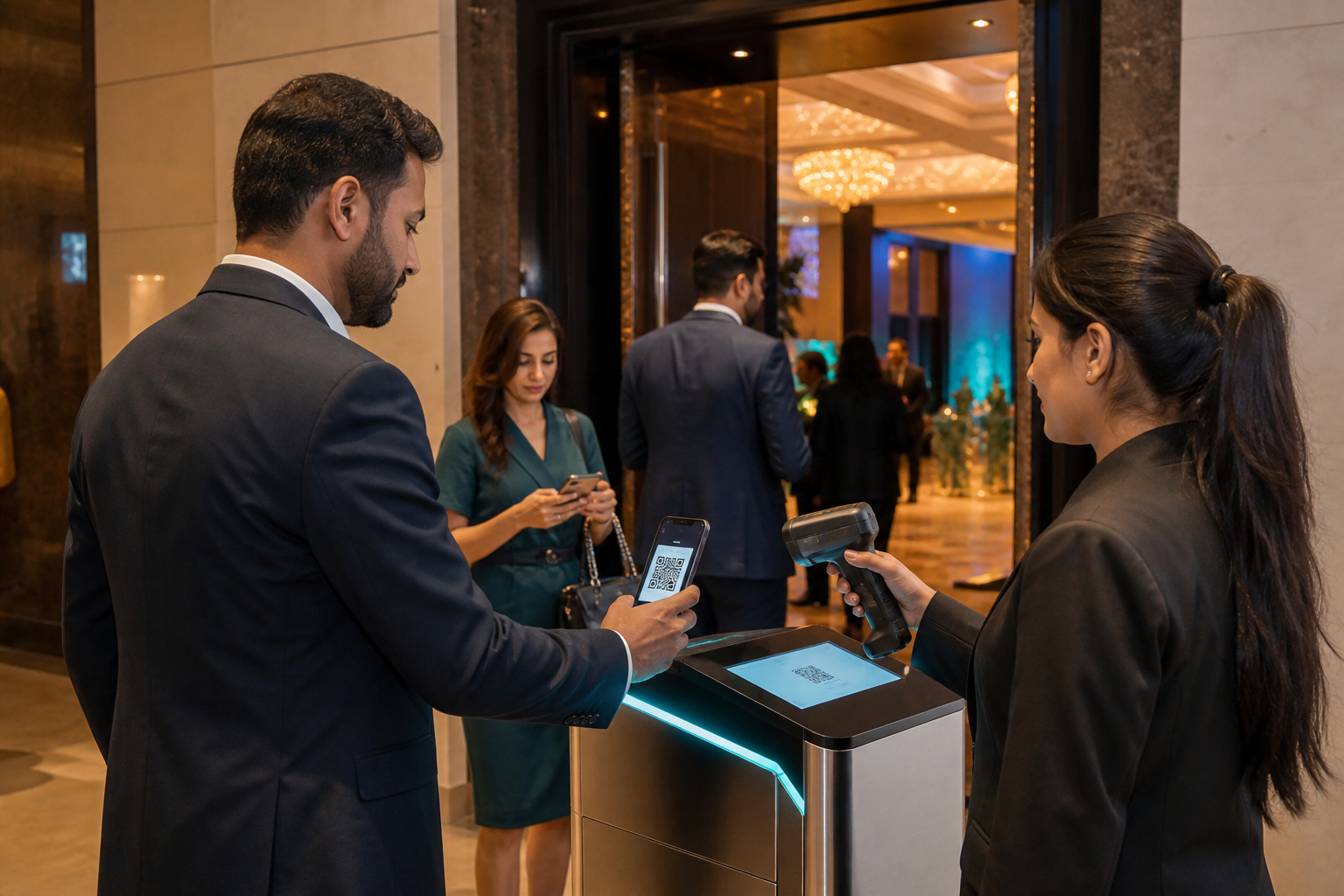
Recce before load-in, an interactive booth wall people actually play, and engagement the agency can show the brand. Need badges at the gate? Pair this with event registration.
 Start a project ↗
Clogik · Exhibitions & expos
Expo booths fail on power, queue, and zero data—not missing holograms. We recce the stand, run an interactive booth wall, capture engagement, and hand the agency something they can show the brand Monday morning.
Also used with: Recce · Interactive wall · Event registration · Data collection · Field reporting
Recce before load-in, an interactive booth wall people actually play, and engagement the agency can show the brand. Need badges at the gate? Pair this with event registration.
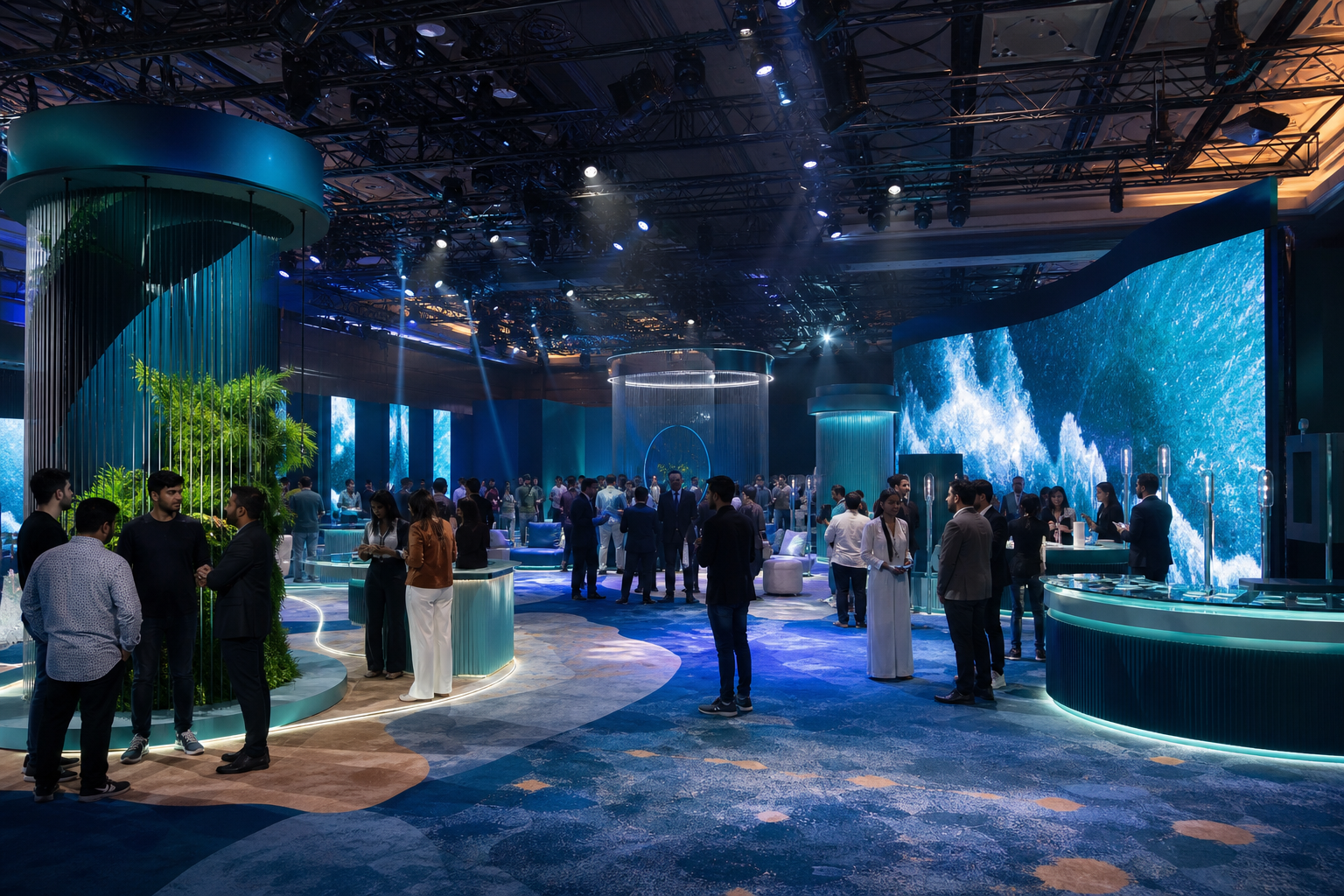
Load-in is where exhibition tech actually fails. Hall maps lie, neighbouring stands overbuild, and the organiser’s power drop is rarely where the CAD placed it. Before fabrication lock, a producer should hold a stand recce that answers: when the truck can enter, which dock, what the service-lift size is, who signs the NOC, and whether overnight work is allowed.
Use the same checklist on every show so Mumbai, Delhi, Bengaluru, and Hyderabad halls stay comparable. Capture photos with captions—not a WhatsApp dump. Record hall name, stall number, neighbour height, hanging-banner rules, and the organiser’s electrical form status. Clogik’s Recce Management System is the capture layer; this page is the booth stack that sits on top.
Agencies that treat recce as a formality reprint graphics. Agencies that treat it as QA ship one kit and open on time.
Interactive booths are electrical products first. An LED wall, sensor PC, and badge printer will not run on a single 5A socket meant for a laptop. Recce should log circuit type, distance to the drop, whether the organiser supplies 16A or 32A, and who is allowed to patch. If the show floor only guarantees power from 08:00, overnight content tests need a generator or a written exception.
Height is the second silent killer. A 3.5 m “wow wall” in the render is useless in a hall with a 3.2 m soffit or a neighbouring double-decker that blocks sightlines. Measure clear height at the install point—not from the organiser brochure. Note hanging points, truss load, and whether the hall bans projection onto shared aisles.
Network is the third. Gesture walls, live dashboards, and QR check-in all assume a path to the internet or a local LAN. Hall Wi-Fi is a shared resource; treat it as unreliable. Prefer a dedicated 4G/5G router with a wired fallback to the wall PC. If the brief includes a Welcome AI Avatar or live attendance wall, test the loop on the same network you will use on show day—not on office broadband.
Write these three numbers on the stand drawing: amps at the drop, clear height at the LED, and whether the interactive PC has a wired or cellular path. If any number is missing, the recce is not done.
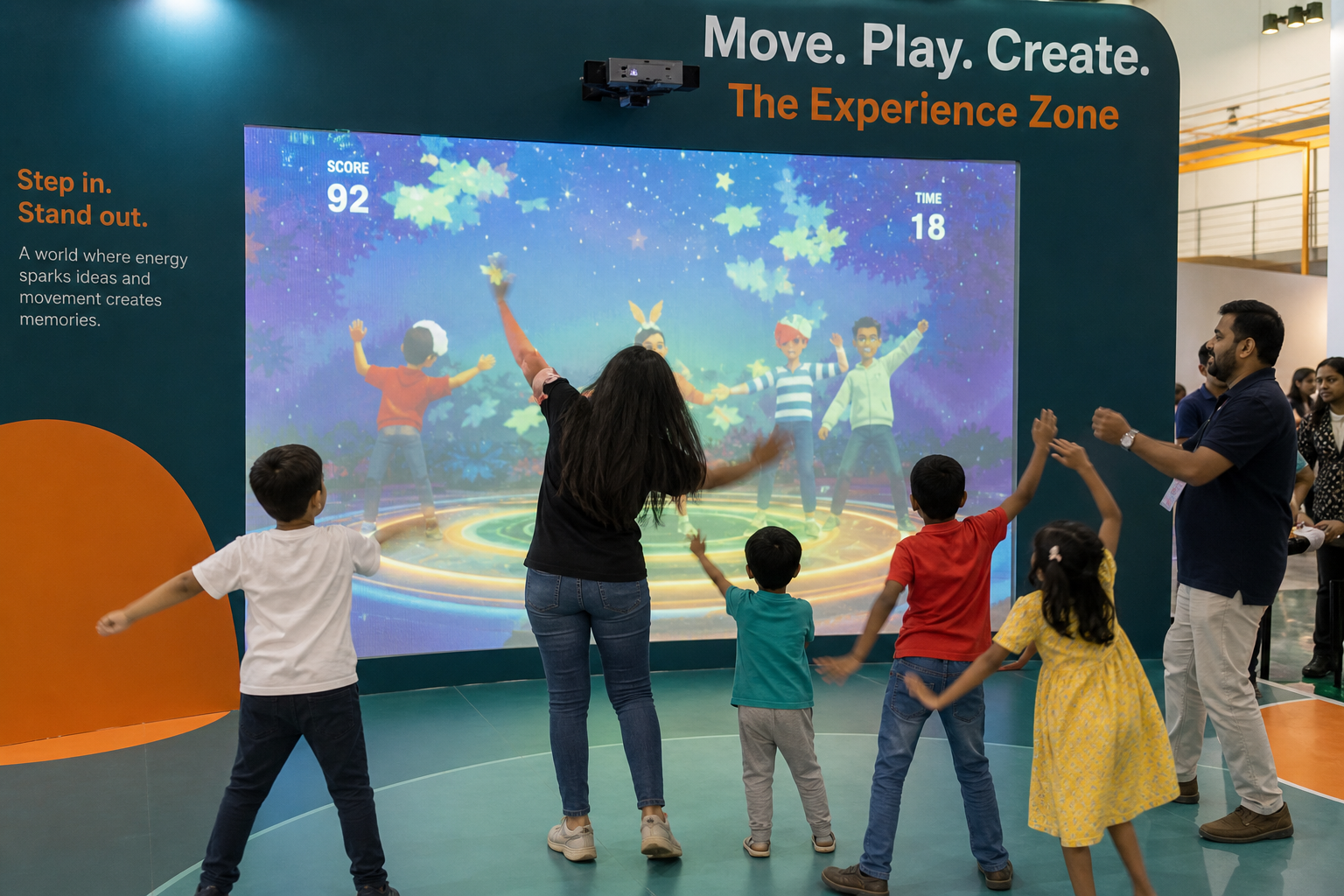
India’s exhibition market is full of gadget catalogs: hologram boxes, headset demos, and “immersive” loops that look expensive in a pitch deck and empty on a Tuesday afternoon. Clogik does not lead with headset theatre. An interactive booth wall is a playable surface—gesture, touch, or camera—skinned to the brand, with a session log the agency can open while the show is still live.
Spectacle has a job: stop someone in the aisle. It is not the same job as engagement data. A catalog piece that cannot report dwell, plays, or opt-in leads forces the agency to invent footfall numbers on Friday night. A wall that people actually play, even on a modest LED, gives the brand a Monday conversation: how many sessions, which game, which hours, which badge scans if you paired registration.
Choose the format from the brief, not from a gadget list. Product launch with a simple mechanic and a queue? Gesture game on LED. Need a catalog people can browse? Touch wall. Need arrival theatre at the gate? That is registration plus a Welcome AI Avatar, not an AR headset farm. If a client asks for AR/VR, be honest: playable walls and Unity booth games are in scope; headset-only booths are a different supplier category.
The brand does not want a folder of booth photos. They want to know whether the stand worked. Clogik logs session counts, optional dwell, and lead or QR capture from the wall, then rolls issues and observations into field reporting and data collection. That is the Monday artefact: a dashboard or export the account team can put in a client wrap without rewriting WhatsApp threads.
Decide the data contract before the show, not after. Which fields are mandatory? Is opt-in required? Does the exhibitor own the list? Can the agency see live counts during the show so they can restaff the aisle? If the wall is a game, report plays and completions—not “estimated footfall.” If you also run the gate, attendance and booth engagement can sit on the same campaign stack so the wrap is one story, not two vendors arguing over numbers.
We do not invent scale. Report what the software counted. If a sensor was down for two hours, say so. Honesty in the wrap is part of the tech partner job—agencies remember the partner who did not inflate the aisle.
Exhibition tech covers the stand: recce, interactive install, engagement. Event registration covers the gate: online forms, QR or RFID check-in, badges, and a live attendance dashboard. Many booth briefs need only the stand. Pair both when the same team owns visitor flow and the booth experience—dealer meets, hosted conferences inside an expo, or brand pavilions that must know who came and who played.
A useful rule: if the organiser already badges the hall, you may only need booth tech and a QR hook on the wall. If your client is the organiser, or the pavilion has its own guest list, run Clogik registration at the inner gate and keep the wall on the same campaign. The Welcome AI Avatar wall is a registration feature, not a substitute for a playable booth game.
Do not buy a full registration platform for a 3×3 m product stand that only needs a gesture wall and a lead form. Do not skip registration when 800 invited dealers must be checked in, badged, and greeted. Match the stack to the job. Recce still comes first either way—wrong power will kill both the wall and the badge printer.
Stand recce before load-in, interactive walls and gesture experiences on the booth, engagement and lead capture, optional QR visitor flows, and field reporting after the show.
No. Conference and expo badge registration lives on Clogik’s Event Registration Platform. Exhibition tech covers the booth and floor. Teams often use both.
Yes. Recce, wall software, and reporting can sit inside the agency’s delivery.
Power load and distribution, ceiling height, load-in route, branding zones, queue space, Wi-Fi or LAN for interactive installs, and permission status with the organiser before booth fabrication starts.
Interactive walls and games log session counts, dwell time, and optional QR or form capture so the agency can report engagement—not just footfall estimates—after the show.
Yes. Stand recce, wall software, and field reporting run on the same campaign OS used for multi-city activations across India.
Book recce and interactive scope as soon as stand dimensions and show dates are confirmed—ideally before final creative lock so power, rigging, and software fit the booth plan.
Yes. Many booth briefs need only stand recce, an interactive wall, and engagement reporting. Full visitor registration is optional on Clogik’s Event Registration Platform when required.
Exhibition agencies, brand booth owners, and expo producers who need stand intelligence, interactive engagement, and post-show data—not only spectacle hardware.
Exhibition brief
Tell us the hall, stand size, and show dates. We will say whether recce, wall, and reporting fit—or whether you only need registration.
How we build
Kinetic installs, Unity games, field SaaS, and AI on the booth—evidenced at MGL India Energy Week, Sting F1, Vislook, and IPL Fan Park.